05
PISPL Team | December 10, 2025 | 859
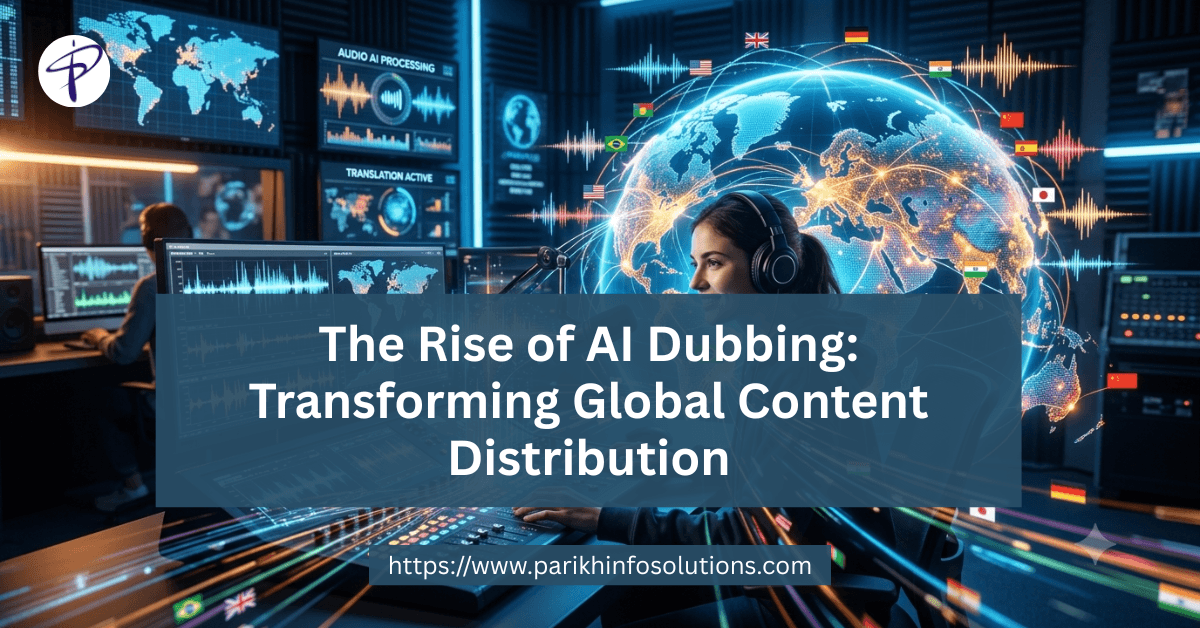
AI Dubbing is rapidly changing how we consume global content. This innovative technology leverages artificial intelligence to automate and enhance the traditional dubbing process, breaking down language barriers with unprecedented efficiency. From films to documentaries and online courses, AI-powered voice localization is making content accessible to a wider audience, promising a future of seamless cross-cultural entertainment experiences.
The Evolution of Dubbing with Artificial Intelligence
The advent of Artificial Intelligence has fundamentally redefined the landscape of voice localization, ushering in an era often referred to as AI dubbing. This innovative approach harnesses sophisticated algorithms to automate and streamline the process of translating and re-recording audio for video content, marking a significant departure from traditional methods. Where human voice actors, translators, and sound engineers once meticulously adapted scripts and performed in recording studios, AI dubbing leverages computational power to achieve these tasks with unprecedented speed and efficiency. It moves beyond mere automated translation to create a comprehensive localization solution that aims for a natural and immersive viewer experience.
At its core, AI dubbing relies on a suite of interconnected AI technologies. The journey typically begins with Speech-to-Text (STT) conversion, which accurately transcribes the spoken dialogue from the original language into written text. This digital transcript then feeds into advanced Machine Translation (MT) engines, often employing neural networks, to provide highly contextual and linguistically accurate translations into the target language. Once translated, Text-to-Speech (TTS) synthesis generates new spoken audio from the translated script. Recent advancements in TTS have dramatically improved the naturalness, prosody, and emotional range of synthesized voices. A particularly groundbreaking aspect is Voice Cloning or Voice Mimicry, which aims to replicate the original actor’s unique vocal characteristics – including tone, pitch, and even subtle emotional inflections – in the newly generated language, maintaining a familiar sonic identity for the audience. Finally, sophisticated Lip-syncing algorithms analyze the original video’s facial movements and phonemes, meticulously adjusting the timing and sometimes even subtly altering the synthesized audio to ensure precise synchronization with the on-screen visuals, enhancing the illusion of the actor speaking the target language.
The benefits of this technological evolution are profound. AI dubbing offers
However, this paradigm shift is not without its complexities. Challenges include
Despite these hurdles, AI dubbing is already being widely adopted across various industries, from global streaming giants like Netflix and Disney localizing film and TV content for simultaneous worldwide release, to e-learning platforms expanding course accessibility, and multinational corporations translating internal training videos and marketing materials, demonstrating its transformative impact on global content access.
Conclusions
AI Dubbing stands as a testament to technological advancement, offering a powerful solution for bridging linguistic divides in media. By integrating sophisticated algorithms for translation, speech synthesis, and lip-syncing, AI significantly streamlines content localization. While presenting challenges regarding nuance and ethics, its efficiency, cost-effectiveness, and scalability are undeniable. As AI continues to evolve, it promises an even more interconnected world, where language barriers fade, making global content truly universal and enriching cross-cultural understanding.
 Author

© Parikh info Solutions Pvt. Ltd.
2026 All Rights Reserved
Find us on: