05
PISPL Team | May 4, 2026 | 468
In today’s globalized digital landscape, subtitles are no longer an option but a necessity. They enhance accessibility, boost SEO, and expand audience reach across languages and demographics. This article delves into the world of subtitle generators and professional subtitling services, exploring how they empower creators to connect with a wider audience.
Subtitle Generators vs Professional Subtitling Services Choosing Your Path to Global Accessibility
A subtitle generator is a technological solution designed to automatically convert spoken audio into written text, which is then synchronized with the video content. Its core functionality heavily relies on Artificial Intelligence (AI) and specifically, Automatic Speech Recognition (ASR) technology. As Wikipedia defines it, Automatic Speech Recognition (ASR) is a computer science discipline and subfield of artificial intelligence that enables computers to identify and process human speech into text. These generators analyze the audio track of a video, recognize spoken words, and then transcribe them into subtitle files. The advantages of using subtitle generators are immediately apparent: they offer remarkable speed, often generating a draft in minutes, and are significantly more cost-effective than human-driven services, making them ideal for quick projects, personal use, or internal drafts. Common features include automatic timestamping, which synchronizes the text with the corresponding audio segments, and increasingly, basic speaker identification and rudimentary translation capabilities.
However, these tools come with notable limitations and challenges. Their accuracy can be compromised by complex audio environments, such as background noise, multiple speakers, or poor audio quality. Accented speech, rapid delivery, and the use of technical jargon or niche terminology often result in significant inaccuracies. Crucially, subtitle generators lack the capacity for cultural nuance or context understanding, which can lead to awkward or even misleading translations and transcriptions. While they provide a rapid initial solution, a thorough manual review and meticulous editing are almost always necessary to achieve high-quality, reliable results suitable for public consumption, particularly when accuracy and clarity are paramount.
In contrast to automated tools, a subtitling service involves human experts who manually create, translate, and synchronize subtitles. This approach leverages critical human attributes such as linguistic expertise, deep cultural understanding, and an acute ear for nuance. The result is a superior quality of subtitles, characterized by precise timing that aligns perfectly with on-screen dialogue, meticulously accurate transcription, proper punctuation, and careful consideration of reading speed to ensure optimal viewer comprehension and comfort. Professionals ensure that the subtitles not only reflect the spoken words but also convey the intended tone and emotion.
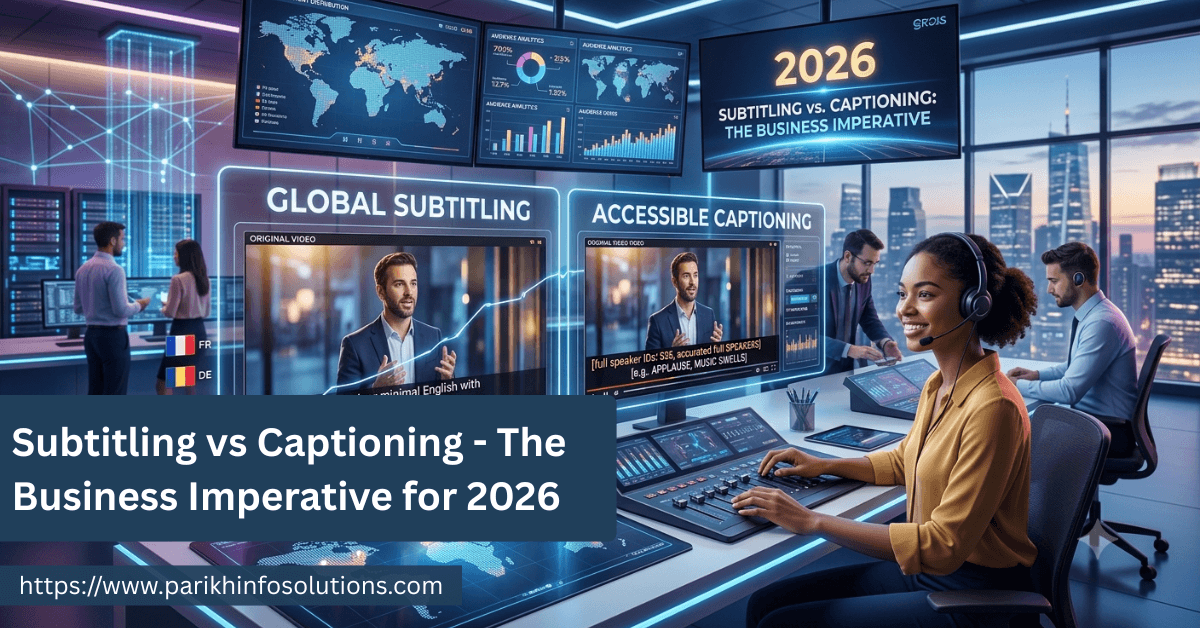
Specialized services are a hallmark of professional subtitling. These include captioning for the deaf and hard of hearing (SDH), which goes beyond mere transcription to describe all significant audio content, such as sound effects and speaker identification, for viewers who cannot hear. As Wikipedia notes regarding Closed Captioning, it differs from traditional subtitles by including non-speech information. Foreign language subtitling extends global reach by translating content accurately and culturally appropriately. Beyond subtitling, many services offer dubbing (replacing original audio with translated speech) and localization. Localization (L10n), as defined by Wikipedia, is the process of adapting content to a specific locale or market, often encompassing more than just language to include cultural references, units of measurement, and legal considerations. Clients typically using these services range from media companies and broadcasters to educational institutions, corporate training departments, and independent filmmakers, all seeking the highest quality for their content where investment in accuracy, accessibility, and audience engagement is justified.
Comparing the two approaches reveals distinct strengths and weaknesses across key metrics. Subtitle generators excel in speed and cost-effectiveness for draft creation or low-stakes content, while professional services undeniably lead in accuracy, linguistic precision, and cultural nuance. Scalability can be high for both, but quality at scale is guaranteed with human services. For content with straightforward dialogue and minimal complexity, generators can be adequate; however, for complex narratives, technical content, or any project where brand reputation and audience understanding are critical, professional services are indispensable.
Both methods, despite their differences, significantly contribute to Search Engine Optimization (SEO). By converting audio into keyword-rich transcripts, subtitles make video content discoverable by search engines, broadening its reach beyond just visual engagement. More profoundly, they enhance accessibility, complying with regulations such as the Americans with Disabilities Act (ADA) and similar international mandates, thereby reaching broader audiences including those with hearing impairments or language barriers. Subtitles are proven to improve user engagement, retention rates, and comprehension across diverse viewer demographics. Videos with subtitles often see higher completion rates and increased shares.
Ultimately, the choice between a subtitle generator and a professional subtitling service hinges on project-specific requirements, budget constraints, and quality expectations. For quick, internal, or personal projects where minor inaccuracies are acceptable, an AI generator followed by a light manual edit might suffice. However, for public-facing content, educational materials, marketing videos, or anything requiring absolute accuracy, legal compliance, and authentic cultural resonance, the investment in a professional service is not merely a cost, but a strategic decision to ensure maximum global accessibility and audience engagement. It’s about aligning the tool with the impact you want your content to make.
Conclusions
From automated tools to expert human services, the landscape of subtitling offers diverse solutions for every need. Whether you prioritize speed and cost-efficiency with a generator, or accuracy and nuance with a professional service, investing in quality subtitles is crucial. They are key to unlocking broader engagement, accessibility, and the true global potential of your video content.
 Author

© Parikh info Solutions Pvt. Ltd.
2026 All Rights Reserved
Find us on: