05
PISPL Team | November 23, 2026 | 76
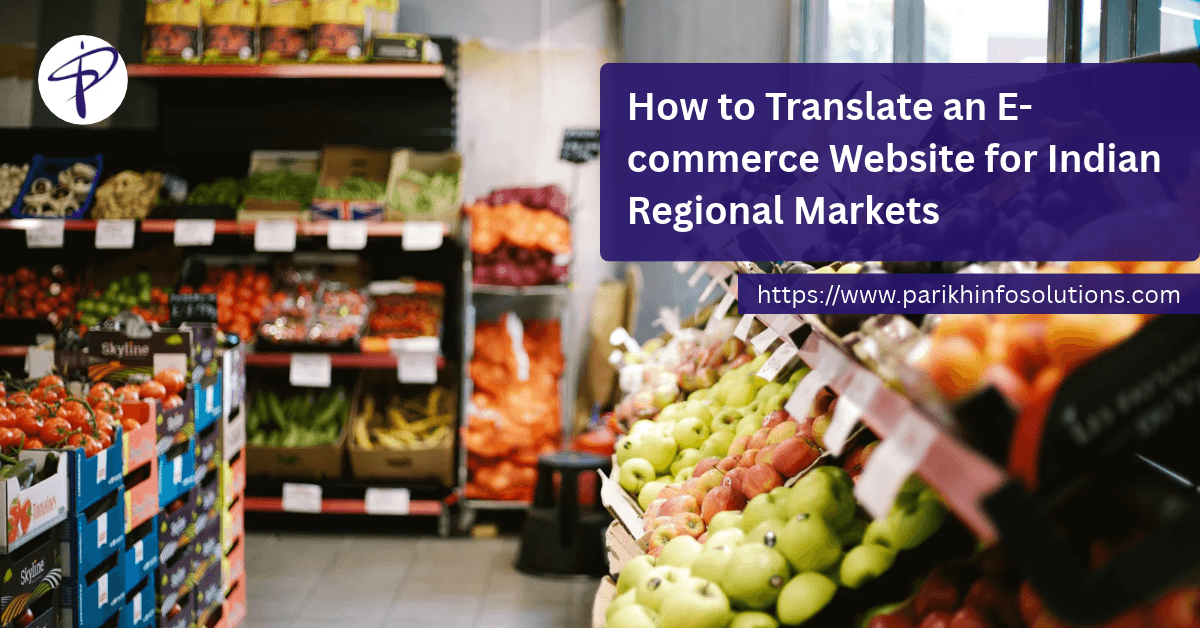
India is one of the world’s most diverse consumer markets, with customers speaking different languages and following distinct cultural preferences. As e-commerce continues to expand beyond metropolitan cities, businesses have an opportunity to connect with customers in Tier 2, Tier 3, and smaller regional markets.
However, reaching these customers requires more than simply offering products online. Language plays an important role in how customers discover products, understand product information, compare prices, and complete purchases.
Translating an e-commerce website into Indian regional languages can help businesses create a more accessible shopping experience, build customer confidence, and expand their reach across the country.
English and Hindi are widely used in digital commerce, but they do not represent every Indian consumer’s preferred language. Customers may feel more comfortable browsing and purchasing products in their mother tongue.
For example, a customer in Maharashtra may prefer Marathi product descriptions, while customers in Tamil Nadu, West Bengal, Karnataka, and Kerala may respond better to content in Tamil, Bengali, Kannada, and Malayalam.
Regional language website translation helps businesses:
The right language selection depends on your target audience, product category, customer locations, and business expansion strategy.
Some important Indian regional languages for e-commerce localization include:
Businesses do not necessarily need to translate their entire website into every Indian language immediately. Starting with languages relevant to their existing customers and expansion plans can be a practical approach.
A successful e-commerce localization project should cover the complete customer journey, not just the homepage.
Translate homepage content, category names, navigation menus, banners, and promotional messages. Customers should be able to understand the website structure and find products without difficulty.
Product pages are among the most important elements of an e-commerce website. Translate product names, descriptions, features, specifications, usage instructions, and other relevant information accurately.
Technical terms and product measurements should remain consistent across all language versions.
Customers should clearly understand every step of the purchasing process. Translate cart details, delivery information, payment instructions, order confirmation messages, and checkout notifications.
Confusing checkout content can create uncertainty and potentially lead to abandoned purchases.
Payment methods, shipping conditions, refund policies, warranties, and return procedures must be communicated clearly. These details directly influence customer confidence.
Translate frequently asked questions, help centre articles, contact information, and customer support messages. This helps customers find answers and understand how to resolve common issues.
Translation converts website content from one language into another while preserving its original meaning.
Localization goes a step further by adapting content to the language, cultural expectations, and regional preferences of the target audience.
For example, a promotional campaign written for an English-speaking audience may need adjustments when adapted for Marathi or Tamil customers. Expressions, product references, promotional messages, and communication styles may need to be modified to sound natural.
For e-commerce businesses, localization is particularly important because customers make purchasing decisions based on how clearly and confidently they understand the information presented.
Translating website content can also support a business’s regional search visibility when implemented with a proper multilingual SEO strategy.
Consider the following practices:
/mr/, /ta/, or /bn/.Regional-language SEO requires keyword research and content adaptation, not just direct translation.
Businesses may encounter several challenges when expanding into regional Indian markets.
Different writing systems: Indian languages use different scripts, so websites must support appropriate fonts, character rendering, and text display.
Product terminology: Some product names and technical expressions may not have commonly accepted regional equivalents. Terminology should be handled consistently.
Cultural differences: Marketing messages, expressions, and promotional content may need adaptation for different audiences.
Frequent content updates: E-commerce websites regularly update product listings, prices, offers, and policies. A structured translation workflow helps maintain consistency.
Website functionality: Translated content must display correctly across desktop and mobile devices, including menus, forms, checkout pages, and notifications.
Working with professional translators and website localization specialists can help businesses manage these challenges effectively.
Parikh Info Solutions Pvt. Ltd. (PISPL) provides professional translation and localization services to help businesses communicate with customers across languages and markets.
Our language solutions support businesses looking to expand their digital presence through regional and international markets.
PISPL can assist with:
With professional linguistic expertise and a structured approach to translation quality, PISPL helps businesses make their digital platforms accessible to diverse audiences.
India’s regional markets offer significant opportunities for e-commerce businesses. However, reaching customers across different states requires communication that reflects their language preferences and expectations.
Translating and localizing an e-commerce website can help businesses improve product understanding, strengthen customer confidence, and create a smoother shopping experience.
A well-planned multilingual website strategy, supported by professional translation and regional SEO, can help e-commerce brands build stronger connections with customers across India.
Looking to expand your e-commerce business into Indian regional markets? Connect with PISPL for professional website translation and localization services.
1. Why should e-commerce websites be translated into Indian regional languages?
Regional language translation helps businesses reach customers who prefer shopping in their mother tongue, improve product understanding, and create a more accessible online shopping experience.
2. Which Indian languages are important for e-commerce website translation?
Hindi, Marathi, Tamil, Telugu, Kannada, Bengali, Gujarati, Malayalam, and Punjabi are among the important regional languages businesses can consider based on their target markets.
3. What is the difference between website translation and website localization?
Website translation converts content into another language, while localization adapts content, terminology, and user experience to the cultural and regional preferences of the target audience.
4. Does regional language translation help e-commerce SEO?
Yes. Proper multilingual SEO, including regional keyword research, translated metadata, language-specific URLs, and hreflang implementation, can help search engines understand and serve relevant language versions.
5. How can businesses maintain consistency across multiple language versions?
Businesses can use approved glossaries, translation memories, professional translators, and structured review processes to maintain consistent terminology and messaging.
 Author


© Parikh info Solutions Pvt. Ltd.
2026 All Rights Reserved
Find us on: