05
PISPL Team | October 21, 2026 | 9
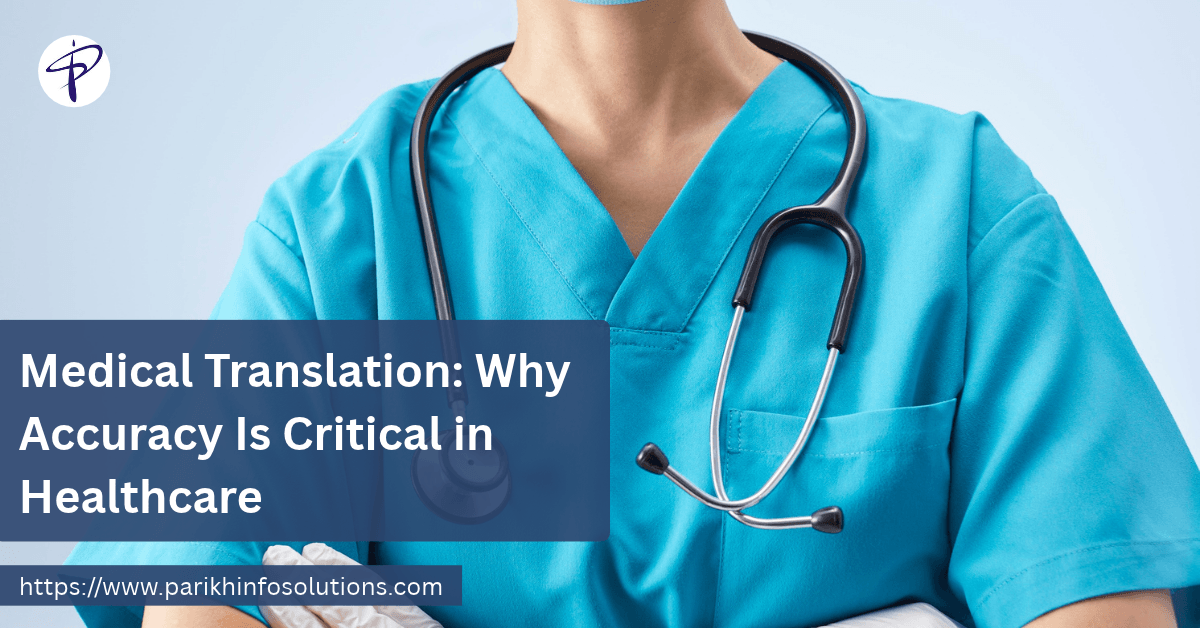
Healthcare depends on clear communication. Doctors, nurses, pharmacists, researchers, patients, and healthcare organisations need to understand medical information accurately to make informed decisions and coordinate care.
However, language barriers can make this difficult, particularly when patients seek treatment abroad, pharmaceutical companies enter international markets, or clinical research involves participants who speak different languages.
This is where medical translation becomes important. It involves translating healthcare-related content, such as medical reports, patient information, clinical trial documents, pharmaceutical materials, and healthcare instructions, from one language into another while preserving the original meaning.
In healthcare, translation errors can have serious consequences. A misunderstanding involving a medication instruction, allergy, diagnosis, or treatment procedure may affect patient safety and the quality of care.
In this article, we explore why accuracy is critical in medical translation, which documents commonly require translation, the challenges involved, and how healthcare organisations can approach medical translation projects responsibly.
Medical translation is the translation of documents and information related to healthcare, medicine, pharmaceuticals, medical devices, and clinical research.
Unlike general translation, medical translation often requires familiarity with specialised terminology, clinical concepts, abbreviations, and the context in which the information will be used.
Medical translation may be required by:
For example, a hospital treating an international patient may need translated medical records to help its healthcare team understand the patient’s medical history. A pharmaceutical company may need patient information leaflets translated before distributing a product in another market.
In both situations, the translation must accurately reflect the source material and meet the requirements applicable to its intended use.
Patient safety is one of the most important reasons to prioritise accuracy in medical translation.
Medical documents may contain information about allergies, existing conditions, medication instructions, dosage units, contraindications, and follow-up care. If this information is translated incorrectly, the consequences may be significant.
For example, an unclear instruction about how often a medication should be taken could lead to confusion for a patient or healthcare professional.
Accurate medical translation helps preserve essential details, including:
Translation should never introduce assumptions or change the meaning of the source. Any ambiguity in clinically significant content should be referred to an appropriate healthcare professional rather than resolved through guesswork.
Patients may need to share medical histories, understand diagnoses, review treatment options, and follow instructions provided by healthcare professionals.
When medical information is available in a language the patient understands, it can help support informed discussions and a clearer understanding of care.
Medical translation may be useful for:
Written translation and spoken interpreting are different services. A translated document can help patients understand written information, while a qualified medical interpreter may be needed for real-time conversations between patients and healthcare professionals.
The appropriate service depends on the clinical situation and communication requirements.
Medical terminology is highly specialised. Many terms have precise meanings, and similar-looking words may refer to different conditions, procedures, or anatomical structures.
A general translation may not adequately convey the intended medical meaning if the translator lacks relevant subject-matter knowledge.
For example, terms used in pathology, radiology, cardiology, oncology, and pharmacology often require careful attention to context.
Professional medical translation should focus on:
The language used in a specialist medical report may differ from the language needed in a patient information leaflet. A good translation must preserve accuracy while matching the purpose and audience of the document.
Pharmaceutical companies may need to translate product information for healthcare professionals, patients, distributors, and regulatory authorities in different markets.
These documents may include product information leaflets, prescribing information, medication guides, packaging text, clinical safety information, and adverse-event reporting materials.
Errors in pharmaceutical translation can create confusion about warnings, contraindications, storage conditions, or administration instructions.
A structured translation process can help maintain consistency across product documents and language versions.
Depending on the product and destination market, pharmaceutical translations may also need to follow specific terminology, formatting, and regulatory requirements. Companies should verify these requirements before publication or distribution.
Clinical research often involves participants, researchers, and institutions across multiple countries and language groups.
Participants need to understand relevant study information, including the purpose of a trial, potential risks, procedures, and their rights. Researchers also need consistent documentation to support reliable data collection and study administration.
Medical translation may be required for:
Informed consent materials require particular care because participants need to understand the information before deciding whether to take part in a study.
Some questionnaires and assessment tools may also require a formal linguistic validation process rather than translation alone. The required approach depends on the study design, intended use, and applicable guidelines.
Medical tourism, international patient referrals, cross-border insurance claims, and global healthcare partnerships can involve the exchange of documents between countries.
A healthcare provider may need medical records, diagnostic reports, prescriptions, referral letters, or discharge summaries translated before a patient receives treatment elsewhere.
Accurate translation helps the receiving organisation understand the information provided by the original healthcare team.
However, translation does not replace clinical review. Healthcare professionals remain responsible for interpreting the information in context and determining appropriate care.
Healthcare and pharmaceutical industries operate under detailed documentation and regulatory requirements. The rules governing medical translation vary depending on the country, product, document type, and intended use.
Some documents may require specific language versions, approved terminology, a defined review process, or particular formatting.
Medical translation can support these processes by helping organisations prepare consistent and understandable documentation in the required languages.
Organisations should establish which requirements apply before commissioning the translation. Where necessary, regulatory specialists and qualified healthcare professionals should review the translated material.
Medical translation involves several challenges that require careful planning and quality control.
Medical language contains specialised terms, abbreviations, and expressions that may not have a direct equivalent in the target language. Translators must understand the context before selecting appropriate terminology.
Medical documents may contain unclear handwriting, incomplete information, inconsistent abbreviations, or poorly written instructions. Translators should flag unresolved ambiguities rather than invent missing details.
Medical terms, professional titles, measurement conventions, and healthcare practices can vary across countries. Translators need to account for these differences without changing the clinical meaning.
Medical documents frequently contain personal and sensitive data. Healthcare organisations should use appropriate data protection procedures and assess how translation providers handle, transfer, store, and access confidential files.
Medical reports and pharmaceutical documents may include tables, laboratory values, dates, units, symbols, and dosage information. These details require careful checking because formatting or transcription errors can change how information is understood.
A patient record, clinical report, and treatment document may refer to the same condition or medication. Consistent terminology helps reduce confusion and supports reliable communication.
Healthcare organisations can improve the quality of medical translation by following a structured process.
1. Select appropriately qualified linguists. Choose translators with relevant medical or pharmaceutical subject-matter experience and expertise in the required language pair.
2. Provide complete source documents. Share readable, up-to-date files and clarify unclear terminology or abbreviations before translation begins.
3. Use approved terminology resources. Glossaries and reference materials help maintain consistency across related documents.
4. Implement suitable quality checks. Depending on the document’s risk and intended use, the process may include independent linguistic review, terminology checks, numerical verification, and subject-matter review.
5. Protect confidential information. Establish suitable file-transfer, access-control, confidentiality, and data-retention procedures.
6. Verify formatting and technical details. Check tables, units, dates, numbers, labels, warnings, and document references against the source.
7. Plan for updates. When a medical document changes, identify which translations need revision and ensure that obsolete versions are not used inadvertently.
The appropriate quality assurance process should reflect the document’s intended use and the potential consequences of an error.
Selecting a suitable translation provider is an important step for healthcare organisations and businesses handling medical information.
Before starting a project, consider the following:
A clear project brief helps the provider understand the intended use of the translation and identify any special requirements before work begins.
Parikh Info Solutions Pvt. Ltd. (PISPL) supports language-related requirements for businesses and organisations. If your organisation needs medical or healthcare document translation, share the document type, language pair, intended use, and any relevant quality or regulatory requirements to discuss the project scope.
Medical content requires careful handling of terminology, numerical details, confidentiality, and document formatting. Establishing these requirements at the beginning helps define the appropriate workflow and review expectations.
To discuss your language requirements, visit parikhinfosolutions.com and contact PISPL for further information.
Accuracy is critical in medical translation because healthcare information can influence patient understanding, treatment communication, pharmaceutical safety, clinical research, and regulatory documentation.
A reliable process requires more than linguistic fluency. It involves subject-matter expertise, consistent terminology, careful verification, appropriate quality assurance, and responsible handling of sensitive information.
Healthcare organisations should select a translation provider suited to their document types and intended use, establish clear requirements, and arrange additional clinical or regulatory review wherever necessary.
By treating medical translation as an essential part of healthcare communication, organisations can help make important information clearer and more accessible across languages.
Medical translation is the translation of healthcare-related content, including medical records, diagnostic reports, pharmaceutical information, clinical trial documents, and patient instructions, from one language into another.
Accuracy helps preserve clinical meaning, medication instructions, warnings, diagnoses, measurements, and other important information. Errors may cause confusion and potentially affect patient safety.
Medical documents should be handled by linguists with suitable experience in the relevant medical subject area and language pair. Depending on the document’s purpose and risk, additional review by a qualified healthcare professional may be appropriate.
Medical translation deals primarily with written materials, such as medical reports and patient information leaflets. Medical interpreting supports spoken communication between patients and healthcare professionals.
Not always. Certification requirements depend on the receiving organisation, document type, and intended use. Check the relevant authority’s instructions before ordering the translation.
Organisations should assess the provider’s data protection practices, file-transfer methods, access controls, confidentiality arrangements, and retention policies before sharing sensitive medical documents.
Provide the document type, source and target languages, approximate length, intended use, deadline, and any special formatting, confidentiality, or review requirements. This helps the provider assess the scope of work.
 Author
Related Article
Stay Informed

© Parikh info Solutions Pvt. Ltd.
2026 All Rights Reserved
Find us on: