05
PISPL Team | October 30, 2026 | 7
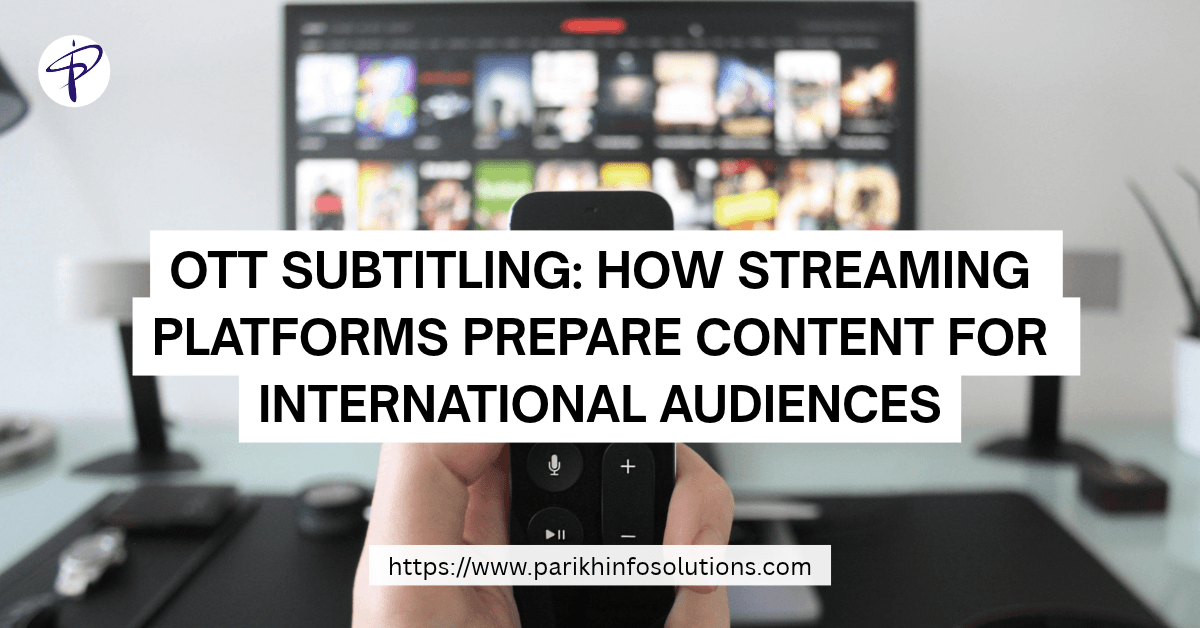
The growth of over-the-top (OTT) streaming platforms has transformed how audiences discover and consume entertainment. Viewers can now access films, web series, documentaries, and original productions from different countries through digital streaming services. As entertainment crosses geographical boundaries, language becomes an important factor in helping viewers connect with stories from around the world.
OTT subtitling helps streaming platforms make audiovisual content accessible to audiences who speak different languages. By translating dialogue and presenting it in readable, synchronized text, subtitles allow viewers to understand stories while preserving the original performances and audio.
For streaming platforms, production houses, and content distributors, professional subtitling is an essential part of preparing content for international distribution. It supports audience accessibility, consistent viewing experiences, and multilingual content delivery across markets.
OTT subtitling is the process of creating synchronized subtitles for films, television series, documentaries, and other content distributed through internet-based streaming platforms.
The process may involve transcribing dialogue, translating it into target languages, adapting cultural references, timing subtitles to match the audio, and preparing files according to platform specifications.
For example, a web series originally produced in Hindi may require English, Spanish, French, German, Arabic, or other subtitle versions before it can reach audiences in different markets.
OTT subtitling generally includes:
These steps help ensure that subtitles communicate the intended meaning while meeting the linguistic and technical requirements of the distribution platform.
A compelling story can appeal to viewers far beyond its country of origin, but language differences may limit how easily international audiences can follow it.
Multilingual subtitles help streaming platforms introduce content to viewers who do not understand the original language. A regional film or television series can become accessible to audiences across several countries without changing its original audio.
For production houses and content distributors, this creates opportunities to prepare existing titles for additional language markets and broaden their potential audience.
Subtitles allow viewers to hear the original dialogue while reading its translated meaning. This is particularly valuable for films and series where an actor’s voice, delivery, emotion, and performance contribute significantly to the storytelling.
Professional translators work to preserve the intended meaning, tone, and character relationships while adapting dialogue for the target language.
This balance helps international viewers experience the original performance while understanding the story.
Regional-language films and series have attracted international interest across multiple entertainment markets. Subtitling helps content producers make stories rooted in local cultures accessible to viewers from different linguistic backgrounds.
For example, a Marathi film, Tamil series, Bengali documentary, or Malayalam production can be prepared with English or other language subtitles for international distribution.
Subtitling supports the global circulation of regional stories while helping audiences understand culturally specific dialogue and references.
Subtitles can help viewers who prefer reading dialogue, cannot comfortably hear the original audio, or watch in environments where sound is unavailable.
For deaf and hard-of-hearing audiences, accessible captioning may be required to include speaker identification, meaningful sound effects, and other relevant audio information.
Streaming platforms should select the appropriate subtitle or caption format according to audience needs, accessibility objectives, and distribution requirements.
OTT platforms manage extensive libraries of films, series, documentaries, and original productions. Preparing these titles for multiple markets requires organized language workflows and consistent quality standards.
Professional subtitling services help content owners prepare language versions, maintain terminology, and review subtitle files before delivery.
A structured process is especially valuable when multiple episodes, seasons, titles, and target languages must be managed within the same release schedule.
Preparing subtitles for streaming involves linguistic, editorial, and technical processes.
The subtitling team reviews the source video and identifies the dialogue, relevant audio information, and any specialized terminology that may affect translation.
Where required, a transcript is prepared or reviewed before translation begins.
Dialogue is translated into the target language while preserving the story, character intent, tone, and context.
Idioms, wordplay, humor, and cultural references may require adaptation rather than literal translation. The goal is to communicate the intended meaning naturally within the constraints of subtitles.
Subtitles are synchronized with the dialogue and divided into readable segments. Subtitle length, reading speed, line breaks, and display duration must be considered so viewers can follow the text without losing track of the action.
The subtitles are reviewed for translation accuracy, spelling, punctuation, consistency, timing, and formatting. Technical checks help confirm that the files meet the receiving platform’s delivery specifications.
Subtitle files are exported in the required format and specifications. Depending on the project, this may involve formats such as SRT, WebVTT, or platform-specific delivery formats.
Requirements vary by streaming platform, content type, and distribution agreement, so files should be validated against the relevant technical guidelines before delivery.
OTT content often includes creative dialogue, fast conversations, background speech, humor, and culturally specific expressions. Translating these elements requires careful judgment.
Cultural references: Local expressions, traditions, and references may not have direct equivalents in another language. Translators must communicate the intended meaning while preserving the context.
Character voice and tone: Dialogue should reflect the personalities, relationships, and emotions of the characters.
Reading speed: Subtitles must remain readable while allowing viewers to follow the visuals and action.
Terminology consistency: Character names, fictional terms, recurring phrases, and specialized vocabulary should remain consistent throughout episodes and seasons.
Technical specifications: Subtitle files must follow the required formatting, timing, and delivery standards for the intended platform.
A professional workflow addresses these challenges through translation expertise, subtitle editing, and structured quality assurance.
Streaming platforms and content owners should consider the following factors when selecting a subtitling partner:
The right subtitling workflow helps content owners prepare material for distribution while maintaining a consistent viewer experience across language markets.
OTT subtitling plays an important role in connecting stories with audiences across linguistic and cultural boundaries. It enables streaming platforms, production houses, and content distributors to prepare films, web series, and documentaries for international viewers while preserving the original audio and performances.
Accurate translation, thoughtful cultural adaptation, readable formatting, precise synchronization, and technical quality assurance all contribute to effective multilingual streaming content.
As digital entertainment continues to reach international audiences, professional subtitling remains a valuable part of global content localization and distribution.
Looking to prepare your video content for international audiences?
Parikh Info Solutions Pvt. Ltd. (PISPL) provides professional subtitling, translation, localization, transcription, voice-over, and dubbing services for media and entertainment companies, content creators, and businesses. Whether you are preparing films, web series, documentaries, or promotional videos for multilingual distribution, PISPL can support your language requirements.
Visit www.parikhinfosolutions.com to explore our language solutions.
OTT subtitling involves creating synchronized subtitles for films, series, documentaries, and other content distributed through internet-based streaming platforms. It can include translation into multiple languages for international audiences.
Multilingual subtitles help viewers understand content in languages they may not speak, making films and series accessible to a wider range of audiences and supporting international content distribution.
Formats can include SRT and WebVTT, as well as other platform-specific formats. The correct format depends on the streaming service’s technical and delivery requirements.
Subtitles primarily communicate spoken dialogue and may translate it into another language. Closed captions are designed to represent audio accessibly, including relevant non-speech sounds and speaker identification where appropriate.
PISPL provides professional subtitling, translation, and localization services for video content. Requirements can be discussed based on the content type, target languages, volume, and delivery specifications.
 Author


© Parikh info Solutions Pvt. Ltd.
2026 All Rights Reserved
Find us on: